Author: BV.org

  • Should Housing Be the Future of the Bitterroot Valley?

    Should Housing Be the Future of the Bitterroot Valley?

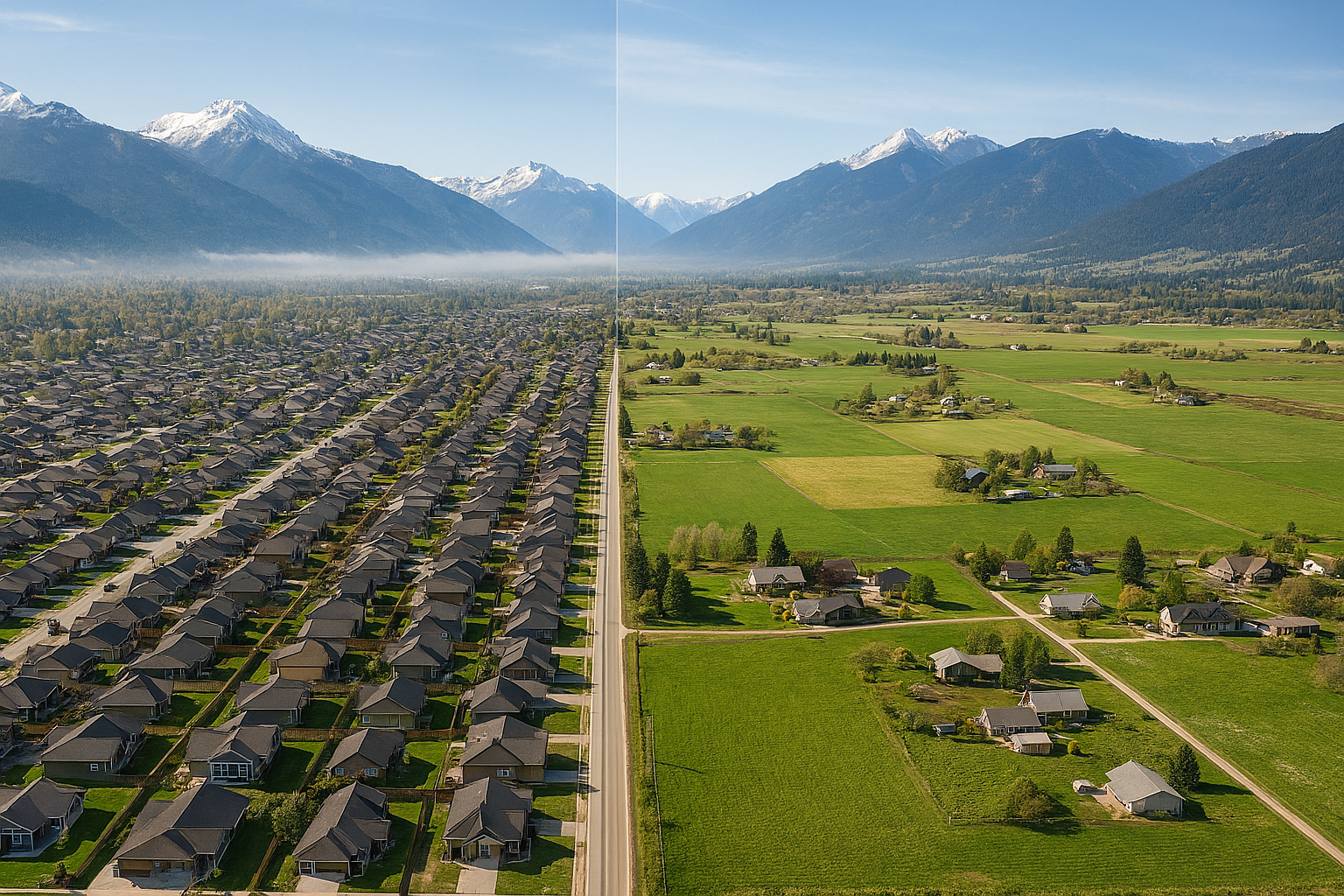
    Nestled between the Sapphire and Bitterroot mountain ranges in western Montana, the Bitterroot Valley offers a rare combination of natural beauty, tranquility, and safety. In an era increasingly defined by climate volatility and existential threats—from rising seas to seismic instability—the Bitterroot Valley stands out as one of the safest places to live in the United States. It is far from coastal flood zones, shielded from hurricanes, untouched by tsunami risk, and geologically stable compared to earthquake-prone regions like California or the Pacific Northwest. It is not in the path of tornado alley, and it lies well outside the blast radius of any supervolcano. In short, it is a refuge in a world of growing uncertainty.

    Given this unique safety profile, it is reasonable to argue that the ideal use of land in the Bitterroot Valley is housing. As Americans seek places to relocate away from climate risk and urban congestion, the valley could serve as a model for resilient, low-density development. With thoughtful planning, it could absorb population growth while preserving its ecological character and community values. The argument becomes even stronger when we consider the evolution of agriculture. Industrial farming in states like California and Iowa already produces the bulk of the nation’s food supply. These regions benefit from economies of scale, advanced irrigation systems, and transportation networks that make it feasible to feed the country without relying on small-scale farming in every valley and hollow. In this context, the Bitterroot Valley’s agricultural contribution is marginal compared to its potential as a safe haven for families, retirees, and remote workers seeking a peaceful life.

    Moreover, housing development in the valley could be designed to complement the landscape rather than dominate it. Clustered housing, conservation easements, and green infrastructure could ensure that growth does not come at the expense of the valley’s natural assets. With proper zoning and investment in public services, the Bitterroot Valley could become a beacon of climate-adaptive living—a place where people can thrive without fear of firestorms, floods, or tectonic upheaval.

    But this vision, compelling as it may be, is not without its flaws.

    First, the assumption that industrial farming elsewhere can indefinitely supply food for a growing population is precarious. California’s Central Valley, for instance, is facing severe water shortages, soil degradation, and increasing climate stress. Iowa’s reliance on monoculture and chemical inputs raises concerns about sustainability and resilience. If these systems falter, decentralized food production—including small farms in places like the Bitterroot—could become essential. Eliminating or reducing local agriculture in favor of housing risks undermining food security in the long term.

    Second, the Bitterroot Valley’s safety from existential threats does not mean it is immune to environmental pressures. Wildfires are a growing concern in the Intermountain West, and the valley is not exempt. Increased development could exacerbate fire risk, strain water resources, and disrupt wildlife corridors. The valley’s aquifers and rivers are sensitive to overuse, and housing expansion could lead to conflicts over water rights and ecological degradation.

    Third, the cultural and economic identity of the Bitterroot Valley is deeply tied to its agricultural heritage. Replacing farmland with subdivisions could erode the valley’s character and alienate long-time residents. It could also drive up property values and taxes, making it harder for working families and farmers to remain. The social fabric of the valley is not just built on safety—it’s built on stewardship, community, and a connection to the land.

    Finally, the notion that housing is the “ideal” use of land assumes a singular vision of progress that may not align with broader ecological or ethical goals. Land use decisions should be guided by a balance of values: sustainability, equity, biodiversity, and resilience. Housing may be part of the future, but it cannot be the whole story.

    In the end, the Bitterroot Valley’s greatest strength may lie not in choosing between housing and agriculture, but in integrating both thoughtfully. It is a place where safety, beauty, and productivity can coexist—if we are willing to plan with humility and foresight.

  • From Valley to Vanguard: Ravalli County’s Path to Trade Sovereignty by 2040

    From Valley to Vanguard: Ravalli County’s Path to Trade Sovereignty by 2040

    The Bitterroot Valley has always been a place of quiet strength. We grow what we eat, fix what we break, and help our neighbors before they ask. But beneath that self-sufficiency lies a hidden imbalance: every year, Montana imports billions in fossil fuels — and Ravalli County bears the cost in fuel bills, trade deficits, and economic leakage.

    What if we flipped the script?

    The 2040 Trade Balance Transition Plan is a bold, locally grounded roadmap to make Ravalli County a net contributor to Montana’s economy — not just through resilience, but through leadership. It’s about reducing fossil fuel imports, electrifying personal transport, expanding renewable exports, and deploying autonomous mobility that works for everyone, especially our seniors and rural families.

    The Problem We Can Solve

    • Montana’s trade deficit: ~$5 billion/year

    • Ravalli’s fuel dependency: nearly total for personal transport

    • Fixed-income households: burdened by car ownership costs

    • Export potential: untapped in organic agriculture and solar energy

    The Plan in Four Phases

    Phase I (2025–2028):

    • EV pilots in Hamilton and Stevensville

    • Waymo autonomous shuttles for seniors and veterans

    • Local fuel sourcing audit begins

    Phase II (2029–2032):

    • Rural charging corridors along US-93 and MT-38

    • Waymo expands to Darby and Florence

    • County fleet begins transition to local fuel

    Phase III (2033–2036):

    • Full EV adoption in valley towns

    • Organic barley and lentil exports scaled

    • Carbon credits monetized through regenerative practices

    Phase IV (2037–2040):

    • Fossil fuel import phase-out for personal transport

    • Ravalli becomes a net contributor to Montana’s trade balance

    • Waymo normalized as public mobility infrastructure

    Why This Works for Ravalli

    • Local fuel sourcing: Partnering with in-state refineries to supply ag and freight

    • EV + Waymo: Reduces household costs, expands access, and eliminates the need to drive for many residents

    • Organic exports: Ravalli’s farms already lead in quality — now we scale for global demand

    • Solar potential: Eastside benches and Darby flats offer ideal conditions for micro-export zones

    Who Benefits

    • Seniors: Safe, autonomous mobility without the cost of car ownership

    • Farmers: Lower fuel costs, new revenue from carbon credits and exports

    • Youth: Shared EV access and Waymo school routes

    • Tribal neighbors: Co-owned fleets and export partnerships

    • Everyone: A stronger local economy, cleaner air, and energy independence

    The 2040 Vision

    Imagine Ravalli County where:

    • Our seniors ride safely without driving

    • Our crops feed a warming world

    • Our energy powers other states

    • Our trade ledger is in the black

    • Our economy is sovereign, resilient, and future-ready

    This isn’t about mandates. It’s about mobility without burden, energy without imports, and exports without compromise.

    Let Ravalli lead.

    Want to get involved? Reach out to your county commissioner, Ravalli Electric Co-op, or BitterrootValley.org. The future isn’t waiting — and neither should we.

  • Watershed Governance Within Cascadia: A Vision for Regional Sovereignty

    Watershed Governance Within Cascadia: A Vision for Regional Sovereignty

    The Bitterroot Valley, located in western Montana, occupies a critical hydrological and ideological position within the Cascadian bioregion. Far from peripheral, the Bitterroot watershed is connected to Cascadia by definition, contributing directly to the Columbia River system. Through this ecological linkage—and with a vision grounded in bioregional sovereignty—the Bitterroot stands poised not as an outlier, but as a potential exemplar of what the Cascadia project seeks to realize: locally governed, economically autonomous regions defined by culture and ecology, not political boundaries.

    Cascadia Defined: Watershed as Territory

    Cascadia is a bioregional concept rooted in the premise that natural systems—specifically watersheds—form the most coherent basis for governance, economy, and cultural identity. Both David McCloskey’s and Bates McKee’s formulary definitions of Cascadia affirm this approach:

    • McCloskey’s View: Cascadia is the land, peoples, and lifeways of the Columbia and Fraser watersheds.

    • McKee’s Model: Centers on geological integrity across the Columbia basin.

    By these standards, the Bitterroot River—flowing into the Clark Fork and eventually the Columbia—is part of the Pacific drainage basin. The valley is not adjacent to Cascadia; it is inherently within it.

    Ecological Membership: The Bitterroot in the Bioregion

    The Bitterroot watershed contains ecological traits characteristic of Cascadia, despite its distance from the eponymous mountain range:

    • Hydrological Integration: As a tributary of the Columbia River, the Bitterroot’s waters contribute to the very artery that geographically, ecologically, and culturally binds the Cascadian biome.

    • Ecoregional Continuity: Forest communities, wildlife corridors, and topographic features are consistent across the bioregion—from the Selway-Bitterroot Wilderness to the Cascade foothills.

    From this standpoint, the Bitterroot Valley is geophysically Cascadian. While many overlook Cascadia’s connection to its mountainous interior, these headwaters are critical to its bioregional coherence.

    Autonomy as Aspirational Identity

    While elements of ecological stewardship and localism already do exist in the Bitterroot, systemic autonomy—economic, political, and cultural—remains aspirational. Cascadia offers a model for how this transformation might unfold:

    • Economic Autarky: Transitioning from dependence on global supply chains toward regenerative local economies—centered on agriculture, decentralized energy, and cooperative production.

    • Political Self-Governance: Empowering communities to make decisions based on place-based needs, potentially through watershed councils, regional assemblies, or participatory governance networks.

    • Cultural Pluralism & Sovereignty: Valuing indigenous leadership, settler heritage, and environmental ethics—protecting identity without relying on nationalist constructs.

    By embracing Cascadian principles, the Bitterroot could evolve from passive inclusion to active leadership within the bioregion.

    Reimagining Regional Identity

    Incorporating the Bitterroot into the broader Cascadian movement is not a matter of redrawing ideological boundaries—it’s a call to realize the region’s latent potential:

    • From Abstraction to Agency: Cascadia reframes the Bitterroot from being “Montana’s west” to being “Cascadia’s east.”

    • From Extraction to Regeneration: Economic development rooted in ecological constraints, not market expansion.

    • From Representation to Participation: Political systems arising organically from the land and community, not imposed externally.

    Watershed as Mandate

    The Bitterroot Valley is not tangential to Cascadia—it is central, by virtue of hydrology, ecology, and shared destiny. Recognizing this inclusion reorients regional dialogue from reactive to visionary. Within the framework of Cascadia, the Bitterroot can explore a future where governance aligns with land, economies sustain people without exploitation, and identities reflect lived relationships with place.

  • Considering Sovereignty for the Bitterroot Valley

    The Bitterroot Valley, nestled between the Sapphire and Bitterroot Mountains of western Montana, is a region of breathtaking natural beauty, rich history, and strong community ties. However, despite its unique character and resilience, the valley remains subject to the whims of state and federal authorities, often finding itself at odds with the decisions made in distant capitals. It is time to reconsider this arrangement and argue for the Bitterroot Valley’s sovereignty, allowing it to chart its own course and determine its own destiny.

    One of the primary reasons the Bitterroot Valley should seek sovereignty is its distinct cultural and geographical identity. The valley has a long and storied history, with evidence of human habitation dating back thousands of years. From the Native American tribes that first called the valley home to the early settlers and ranchers who shaped its modern landscape, the Bitterroot Valley has always been a place apart. Its unique blend of rugged individualism, pioneering spirit, and deep connection to the land sets it apart from other regions in Montana and the United States as a whole.

    Furthermore, the Bitterroot Valley’s economy is heavily reliant on industries such as agriculture, forestry, and tourism, which are often at odds with the policies and regulations imposed by state and federal authorities. By gaining sovereignty, the valley would be able to tailor its economic policies to suit its specific needs and circumstances, rather than being forced to conform to a one-size-fits-all approach. This could include implementing more flexible and responsive regulations, investing in local infrastructure, and promoting sustainable development that balances economic growth with environmental protection.

    Another significant advantage of sovereignty would be the ability for the Bitterroot Valley to manage its own natural resources. The valley is home to vast tracts of public land, including the Bitterroot National Forest, which are currently managed by federal agencies. While these agencies often have the best of intentions, they can be slow to respond to local concerns and may prioritize national or global interests over the needs and desires of the valley’s residents. By taking control of its own natural resources, the Bitterroot Valley could ensure that they are managed in a way that benefits the local community, while also protecting the environment and preserving the valley’s unique character.

    In addition to these practical considerations, there is also a strong philosophical argument for the Bitterroot Valley’s sovereignty. The concept of self-governance is deeply rooted in American history and culture, and the idea that communities should be free to determine their own destiny is a fundamental principle of democracy. By seeking sovereignty, the Bitterroot Valley would be exercising its right to self-determination, allowing it to create a system of government that is truly of, by, and for the people who call the valley home.

    Of course, there are also potential challenges and complexities to consider. Achieving sovereignty would likely require significant negotiations with state and federal authorities, as well as a referendum or other vote by the valley’s residents. There may also be concerns about the valley’s ability to provide certain services and amenities, such as healthcare, education, and infrastructure, which are currently provided by the state or federal government. However, these challenges can be overcome through careful planning, cooperation, and a commitment to finding creative solutions that work for the valley as a whole.

    In conclusion, the Bitterroot Valley has a unique opportunity to forge its own path and create a brighter future for its residents. By seeking sovereignty, the valley can take control of its own destiny, manage its own natural resources, and create a system of government that is truly responsive to local needs and concerns. It is time for the Bitterroot Valley to join the ranks of other self-governing communities around the world, and to become a beacon of independence, self-reliance, and community spirit in the heart of Montana.

  • Embracing Bioregionalism in the Bitterroot Valley

    Embracing Bioregionalism in the Bitterroot Valley

    Tucked away in the heart of the Northern Rockies, the Bitterroot Valley is a stunning example of natural beauty, with its rugged peaks, striking canyons, and diverse wildlife. As a naturally bounded ecosystem rich in ecological and cultural heritage, the Bitterroot Valley is an ideal place to explore the concept of bioregionalism – an approach to living that emphasizes a deep connection with the local environment and community.

    What is Bioregionalism?

    Bioregionalism is a philosophy that encourages individuals to develop a sense of place and identity rooted in their local ecosystem. It involves recognizing the unique characteristics of a region, including its geography, climate, flora, fauna, and cultural traditions. By embracing bioregionalism, individuals can cultivate a deeper understanding of their surroundings and work towards creating more sustainable and resilient communities.

    The Bitterroot Valley as a Bioregion

    The Bitterroot Valley is a distinct bioregion, bounded by the Bitterroot watershed. The valley is home to a diverse range of plant and animal species, including grizzly bears, wolves, and elk. The region’s unique geology and climate have also shaped the local culture, with many residents relying on agriculture, forestry, and ecotourism for their livelihoods.

    Principles of Bioregionalism in the Bitterroot Valley

    So how can we apply the principles of bioregionalism in the Bitterroot Valley? Here are some ways:

    1. Support local food systems: By buying locally grown produce and supporting small-scale farmers, we can promote sustainable agriculture practices and reduce our reliance on industrialized food systems.

    2. Conserve water resources: The Bitterroot River is a vital component of the valley’s ecosystem. We must work to protect this resource through conservation efforts and responsible water management practices.

    3. Preserve biodiversity: The valley’s unique wildlife requires careful stewardship. We can support conservation efforts by protecting habitats and promoting wildlife-friendly land-use practices.

    4. Foster community engagement: Bioregionalism emphasizes the importance of community involvement in decision-making processes. By engaging with local organizations and initiatives, we can build stronger relationships with our neighbors and work towards common goals.

    5. Promote eco-tourism: Responsible tourism practices can help support local economies while minimizing our impact on the environment.

    Benefits of Bioregionalism in the Bitterroot Valley

    By embracing bioregionalism in the Bitterroot Valley, we can reap numerous benefits for both our community and environment:

    • Enhanced environmental sustainability: By working together to protect our natural resources;

    • Economic resilience: Supporting local businesses promotes economic growth;

    • Community cohesion: Fostering connections between residents helps build strong social bonds;

    • Cultural preservation: Celebrating our unique cultural heritage preserves traditions for future generations;

    As we look towards building more sustainable futures for ourselves other regions could learn from adopting similar approaches like those found within this beautiful valley where humans live alongside nature rather than dominating it – let us draw inspiration from these surroundings so others might follow suit elsewhere across America too!

  • Bitterroot Valley Urbanization: Growth and the Rural Myth

    Bitterroot Valley Urbanization: Growth and the Rural Myth

    The Bitterroot Valley in Montana, nestled amid the stunning backdrop of the Selway-Bitterroot Wilderness to the west and the Sapphire range to the east, evokes fantasies of open space, rushing waters, and a slower pace of life. Ravalli County, which encompasses most of the long narrow valley, boasts a population of just over 50,000 spread across the valley floor. However, like many rural areas across the country, the Bitterroot Valley is experiencing a wave of urbanization, presenting both challenges and opportunities.

    Signs of a Growing Ravalli County:

    Ravalli County has seen significant population growth in recent decades. A 2002 economic needs assessment identified the 1990s as a boom period, with growth exceeding 40% [bvcommunitycollege.org]. While the pace has slowed, current estimates show a growth rate of around 1.2% annually [worldpopulationreview.com]. This may seem small, but it translates to a steady increase that necessarily transforms the character of the valley. This trend, documented by The Guardian, Vanity Fair, LA Times, and The Washington Post, bucks the national narrative of small-town decline, where many rural communities struggle to keep their populations and economies afloat [washingtonpost.com].

    Who’s Moving to Montana’s Bitterroot Valley?

    The influx of new residents driving Montana rural development are influenced by many factors. Missoula, a bustling college town to the north, boasts a vibrant economy, and Ravalli County offers a more affordable alternative with a beautiful natural setting [bitterrootstar.com]. Additionally, retirees and remote workers seeking a peaceful escape from urban life are drawn by the valley’s mythic allure, fueled by its prominence as a shooting location for the series Yellowstone. This trend is reflected in the county’s demographics – the median age sits at 48.5, higher than the state average, and over 23% of the population falls above 65 years old [bitterrootstar.com].

    Challenges and Considerations of Bitterroot Valley Urbanization

    This growth brings a strain on housing and infrastructure, let alone natural resources. One key indicator of this pressure is the issuance of well water permits by the DNRC, a crucial step for residential construction. While data isn’t readily available online, information collected by the local realtors’ association shows the number of wells to be exponential. In a closed basin like the Bitterroot watershed, this will inevitably lead to stress on water resources.

    A History of Resistance to Growth Management:

    It’s important to note that Ravalli County has a history of resistance to formal growth management. In 2008, voters rejected a county-wide growth policy, citing concerns about government overreach and a desire to preserve a more rural way of life [ravallirepublic.com, noref1.org, bitterrootstar.com]. This reflects a strong current of opinion within the community that prioritizes individual property rights and private interests over coordinated planning [montanafreepress.org].

    Finding Balance in Bitterroot Valley Growth

    The Bitterroot Valley faces the challenge of accommodating further Ravalli County growth while preserving its rural character. Despite the rejection of a formal growth policy, county planning efforts like the Ravalli County Targeted Economic Development District Plan can still play a role in guiding development in a more measured way [ravalli.us]. Prioritizing sustainable practices, infrastructure improvements, and responsible land use will be crucial in ensuring the valley’s charm endures for future generations.

    The Future of the Bitterroot Valley: Embracing Progress and Tradition

    The Bitterroot Valley is at a crossroads. By thoughtfully managing growth, the community can capitalize on the economic benefits of a growing population while safeguarding the natural beauty and rural lifestyle that defines the region. Residents, businesses, and policymakers all have a role to play in shaping a future that embraces both progress and tradition. Finding common ground between those seeking to preserve the rural character and those who see opportunity in growth will be key to the Bitterroot Valley’s future.

  • Watershed Based Governance: How the Bitterroot Valley Harmonizes with Powell’s Vision

    Watershed Based Governance: How the Bitterroot Valley Harmonizes with Powell’s Vision

    John Wesley Powell, the one-armed explorer who unraveled the secrets of the Grand Canyon, wasn’t just a cartographer of rivers. He was a visionary, arguing that the West’s future hinged on respecting natural boundaries, watersheds to be precise. While his radical proposition for watershed-based administration wasn’t fully embraced in his time, there’s a corner of Montana where his symphony of geography and governance plays in perfect harmony. Welcome to the Bitterroot Valley, where Ravalli County’s borders encircle the Bitterroot River watershed, exemplifying the power of Powell’s vision in action.

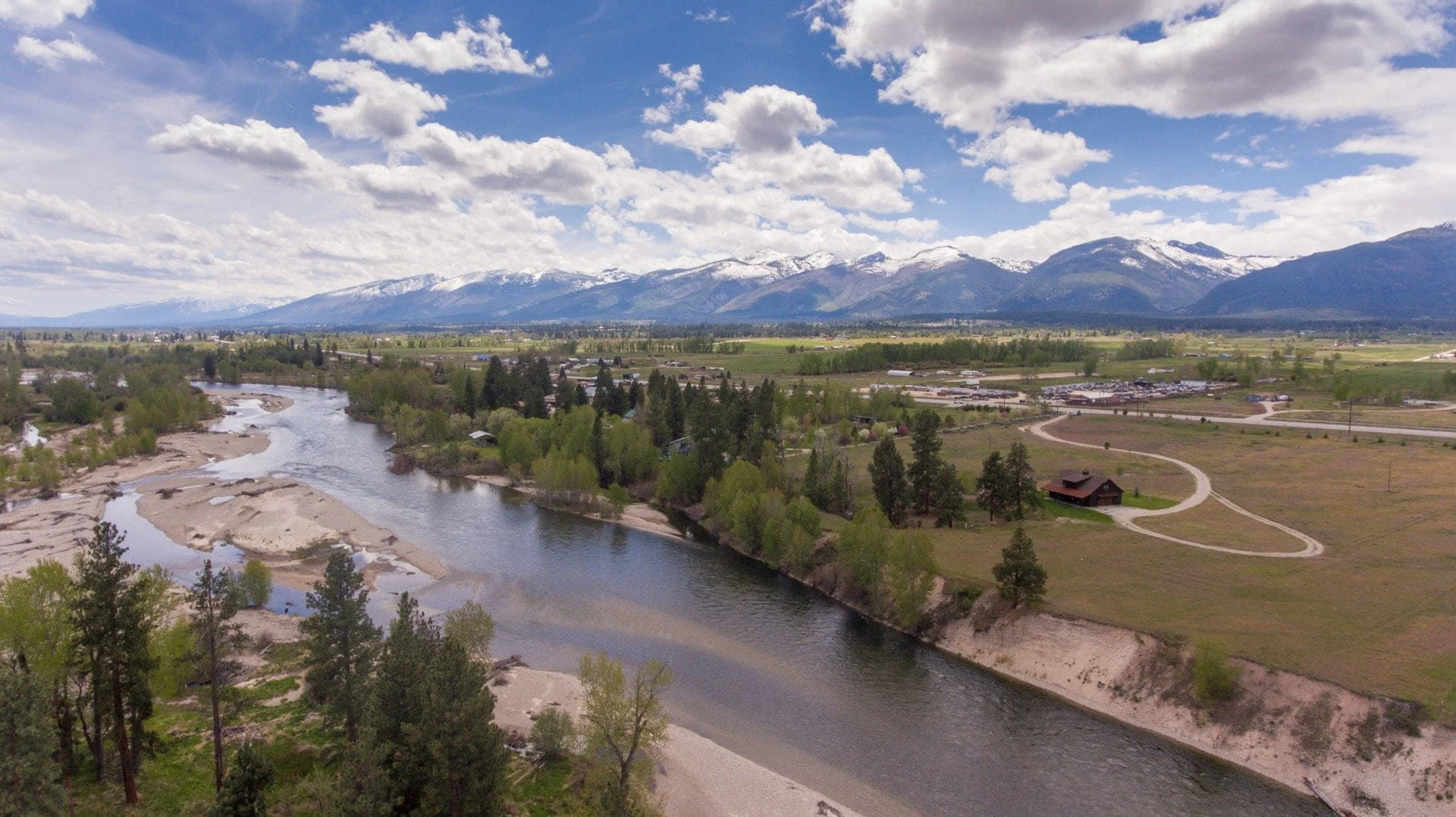
    Nestled between the jagged peaks of the Bitterroot Mountains to the west and the rolling summits of the Sapphire Mountains to the east, the valley cradles the lifeblood of the region – the Bitterroot River. This serpentine ribbon, winding through prime farmlands and exurban subdivisions, isn’t just a pretty face. It’s the artery that nourishes farms, waters lawns, and sustains a vibrant ecosystem. And here’s the magic: the boundaries of Ravalli County, the valley’s governing body, perfectly mirror the contours of the Bitterroot watershed.

    This alignment is no coincidence. Earlier settlers, with an innate understanding of the value of natural resources, recognized the river as the central thread weaving the valley’s tapestry. In establishing county lines that followed the watershed’s natural boundaries, they laid the foundation for a governance system in tune with the rhythm of the land they inhabited.

    Imagine the difference. Instead of fragmented water management, where upstream decisions could devastate downstream communities, residents of Ravalli County have the opportunity to speak with a unified voice when it comes to safeguarding the Bitterroot’s water. From irrigation practices to pollution control, decisions on water and land use are made by those most affected by them, incentivizing an equitable and sustainable use of this precious resource.

    This holistic approach isn’t only good for the river; it’s good for the people. Farmers have a vested interest in protecting the source of their irrigation, residents maintain access to fresh food and clean water, and communities thrive in an environment where water security is a shared priority. It’s a harmonious balance, a testament to the power of Powell’s vision.

    Of course, the Bitterroot Valley isn’t a utopia. Challenges remain, from balancing agricultural needs with household use to adapting to climate change. But the alignment of governance boundaries with the watershed provides a strong foundation for addressing these challenges collaboratively. It’s a model for other regions wrestling with water scarcity and environmental pressures, a living example of how the sustainable future is grounded in the bedrock of Powell’s radical proposition.

    So, the next time you hear the gurgling melody of a running water, remember the Bitterroot Valley. Remember John Wesley Powell and his radical symphony. And remember that oftentimes, the most sustainable solutions lie not in rigid lines on a map, but in listening to the whispers of the land and respecting the boundaries that nature has already drawn.

    By embracing Powell’s vision, we can ensure that the lifeblood of our planet continues to flow, not just through rivers, but through the veins of our communities, our governance, and our hearts. Let the Bitterroot Valley be a testament to this possibility, a living melody of water and wisdom, and a model for others to follow.

  • Why the Bitterroot Valley Needs to Maintain the Bitterroot Branch Rail Line

    Why the Bitterroot Valley Needs to Maintain the Bitterroot Branch Rail Line

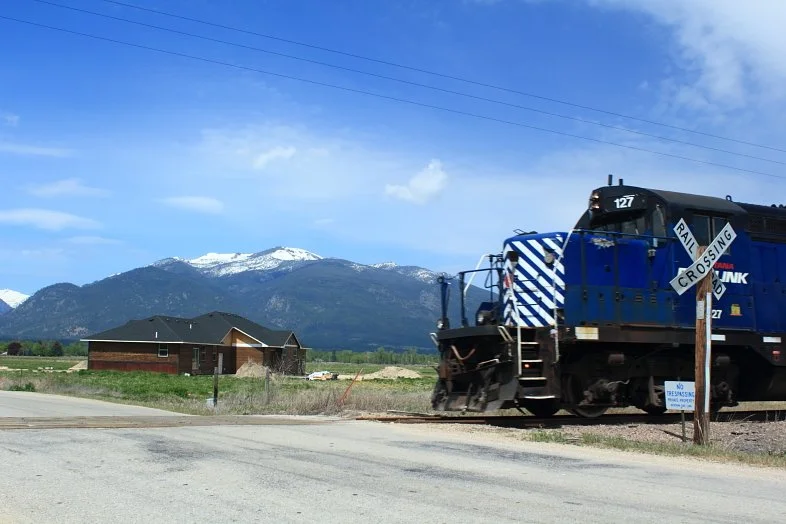
    If you have ever traveled through the Bitterroot Valley, you will likely have noticed the old rail line that runs through the valley, connecting Missoula to Darby and beyond. You may have also seen the crossings that are being paved over and heard that this rail line may potentially be abandoned. This would be a huge mistake for the valley and its residents, and here’s why.

    The Bitterroot Branch Line is not only a historic asset that dates back to the early 20th century, but also a vital economic lifeline for the valley. It provides access to markets and resources for local businesses, especially those involved in agriculture, timber, and mining. It also offers potential for development of the rare earth mineral deposit up the West Fork of the Bitterroot River, which could bring millions of dollars and hundreds of jobs to the valley. Rare earth minerals are essential for many high-tech products and industries, such as smartphones, electric vehicles, wind turbines, and defense systems. The United States currently relies on imports from China for most of its rare earth supply, which poses a national security risk. Developing our own domestic source of rare earth minerals would reduce our dependence on foreign countries and boost our economy and innovation.

    The rail line also has environmental benefits over trucking, which is the main alternative mode of transportation for goods and materials in the valley. Rail transport is more fuel-efficient, less polluting, and safer than trucking. It reduces greenhouse gas emissions, road congestion, noise, and accidents. It also preserves the scenic beauty and rural character of the valley, which attracts tourists and visitors who contribute to the local economy.

    Another benefit of the rail line is the potential for commuter service to Missoula and points beyond. Many residents of the valley work or study in Missoula, or travel there for shopping, entertainment, or medical services. Driving to Missoula can be costly, time-consuming, and stressful, especially during peak hours or winter conditions. A commuter rail service would offer a convenient, affordable, and comfortable alternative that would save time and money for travelers. It would also reduce traffic and parking problems in Missoula and enhance the quality of life for both communities.

    In short, maintaining the rail line is crucial for the future of the Bitterroot Valley. It would support local businesses, create new opportunities, protect the environment, and improve transportation options for residents and visitors. It would also preserve a part of our history and heritage that connects us to our past and our future.

    If you agree with this vision, please join us in advocating for the preservation and improvement of the rail line. Together, we can make sure that the Bitterroot Valley remains a vibrant and sustainable place to live, work, and play.

  • Why the Bitterroot Valley is the Ideal Place to Develop a Circular Economy

    Why the Bitterroot Valley is the Ideal Place to Develop a Circular Economy

    If you are looking for a place to live that offers economic security, environmental sustainability, and community resilience, you might want to consider the Bitterroot Valley of western Montana. This rural area is endowed with abundant natural resources, a rich cultural heritage, and a visionary spirit that makes it an ideal place to develop a circular economy. 

    What is a circular economy? 

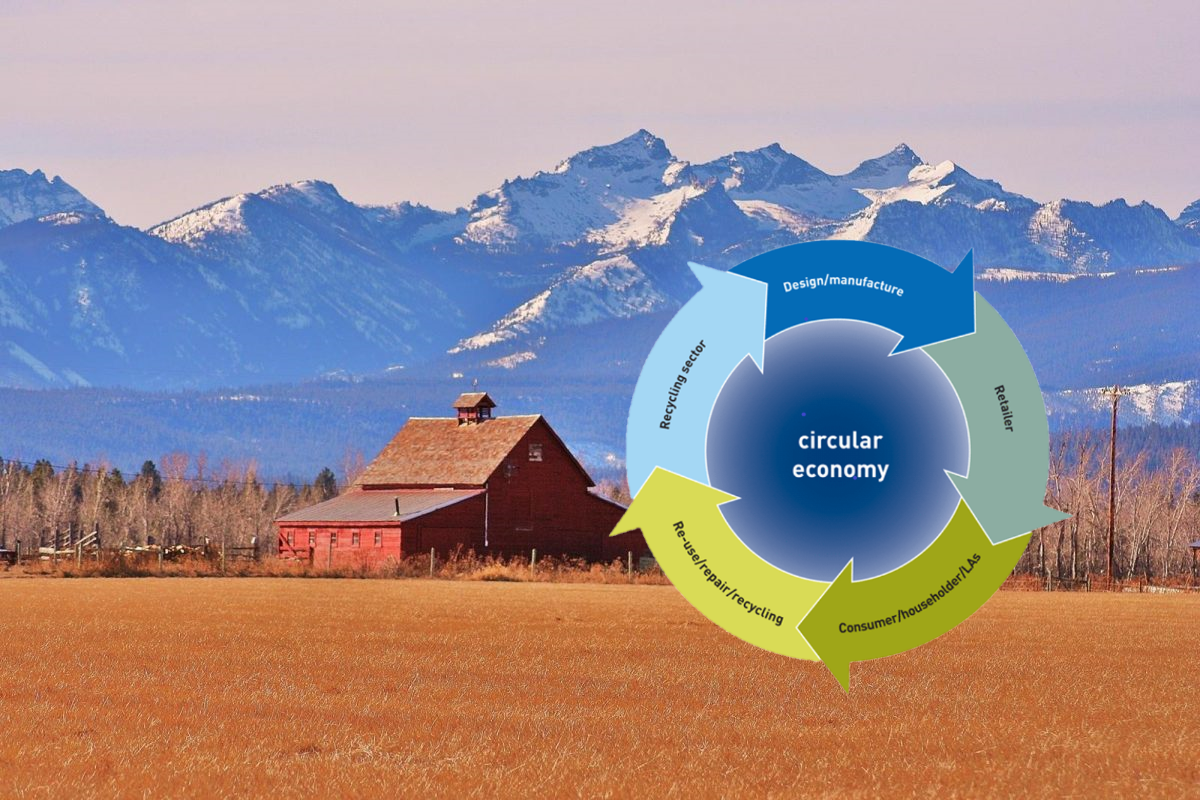
    A circular economy is an economic system that aims to eliminate waste and pollution, keep products and materials in use, and regenerate natural systems. It is based on the principles of designing out waste, keeping resources in circulation, and restoring ecological balance. 

    A circular economy is different from a linear economy, which follows a “take-make-waste” model of production and consumption. In a linear economy, resources are extracted from nature, transformed into products, used by consumers, and then discarded as waste. This creates environmental and social problems such as resource depletion, greenhouse gas emissions, landfills, and inequality. 

    A circular economy offers many benefits for businesses, consumers, and society as a whole. It can help reduce costs, increase efficiency, create new revenue streams, foster innovation, enhance customer loyalty, improve well-being, and protect the environment. 

    Why the Bitterroot Valley? 

    The Bitterroot Valley is an ideal example of a locale where a circular economy can be implemented at a local level. The valley has a long history of self-reliance and community cooperation, dating back to the Native American tribes that inhabited the area before European settlers arrived. The valley is also home to diverse ecosystems that provide essential environmental services such as water purification, soil fertility, pollination, and climate regulation. 

    The Bitterroot Valley has many assets that can support a circular economy, such as: 

    • Water and air quality: The valley has abundant water resources from the Bitterroot River and its tributaries, as well as clean air from the surrounding mountains. These natural resources are vital for human health and agricultural production. 

    • Energy autonomy: The valley has great potential for renewable energy generation from solar, wind, hydroelectric, biomass, and geothermal sources. These energy sources can reduce dependence on fossil fuels and lower greenhouse gas emissions. 

    • Locally produced food, shelter, and necessities: The valley has a strong agricultural sector that produces food crops such as wheat, barley, oats, alfalfa, potatoes, apples, cherries, and berries. It also has livestock operations that raise cattle, sheep, goats, pigs, chickens, turkeys, and bees. The valley also has local businesses that provide goods and services such as construction materials, furniture, clothing, health care, education, and entertainment. 

    • Adequate and up-to-date infrastructure: The valley has basic infrastructure such as water and sewer systems, electricity production and transmission, health and human services, primary and post-graduate education, transportation, irrigation, and internet capacity. These infrastructure elements are essential for facilitating economic activity and social interaction. 

    • Open and public spaces: The valley has plenty of open and public spaces such as parks, trails, forests, wildlife refuges, and historical sites. These spaces offer recreational opportunities, cultural enrichment, and aesthetic value for residents and visitors alike. 

    An example for the world

    By leveraging these unique features, the Bitterroot Valley can become a model for circular economies in the United States and beyond. By working together to promote circular initiatives, we can create a more sustainable and prosperous future for not only the Bitterroot Valley, but everyone.

    Contact us to get involved!

  • An Agricultural History of the Bitterroot Valley

    An Agricultural History of the Bitterroot Valley

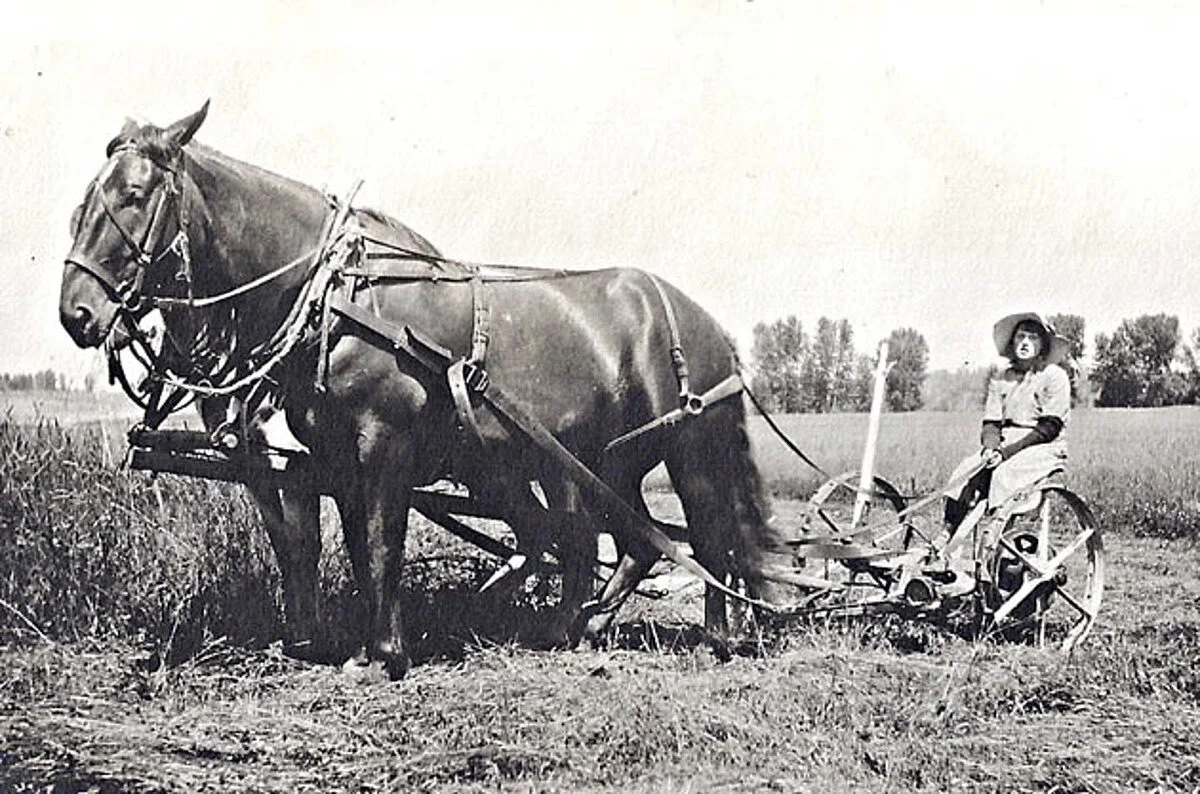
    Agricultural production in the Bitterroot Valley of Montana officially began in the 1840’s, when priests encouraged the planting and harvest of crops near present-day Stevensville.  Salish-Kootenai Indians dug bitterroots [the Bitterroot, Lewisia redivia, is the state flower], picked berries, fished and hunted game, but probably did not plant corn, squash or beans as in other regions.  Lewis and Clark traded horses with them, since they used horses to hunt bison east of the mountains.  There was little to eat in the Bitter Root, (this is the original wording for the name of the valley), just a few deer and some grouse, forcing the party to eat of their own horses.  Elk were transplanted into the Bitter Root in the early 1900’s.  Because sportsmen provide the funding for wildlife, some populations of wild game are larger now than any time in history.

    Father DeSmet encouraged the cultivation of oats, wheat and potatoes in 1842 and brought cattle from Ft. Colville in Washington territory the same year.  The St. Mary’s Mission supplied travelers on the Mullan Road.  Major John Owen purchased the Mission in 1850, and raised cattle in the valley, as did more settlers who arrived later.

    Late in the Civil War, some settlers escaping the Border Wars in the Ozarks settled near present-day Corvallis, and, as more homesteaders arrived, irrigation systems and grain fields began to appear. When Marcus Daly decided to establish ranches in the valley, he acquired land and by 1890 expanded the production of hay for racehorses, as well as planting grain and fruit trees.  Several sawmills were set up and generally stripped nearly all of the lower-lying forests for mine timbers, so all those workers had to be fed from local sources.  An era of sheep production on the benches began, and cattle were grazed in the valley and on the forests.

    The first successful apple orchard was planted in 1868 and by 1890 there were 6,000 trees in the valley.  By 1900 there were more than 300,000 apple trees and by 1913, nearly all the benchland on the east and west sides of the valley was in orchards, having been planted by investment companies that hoped to lure buyers of land.  (Soil Survey, Bitterroot Valley Area, USDA 1959, p. 5-7).

    With the removal of the Salish-Kootenai Indians to the reservation north of Missoula in 1890, more land became available and investors began what was called “The Apple Boom”.  The investors bought homesteaded dryland for two to fifteen dollars an acre, planted thousands of trees even before irrigation arrived, and began an aggressive advertising campaign in the eastern states.  They sold land for $400 to $1000 an acre to people who expected to do very little work and make their full-time living growing fruit, especially MacIntosh apples.  The “Big Ditch” was developed in conjunction with the sale of orchard tracts, and for a time, the Bitter Root MacIntosh apple was sold nationwide.  In 1920 there were 720,000 trees in the valley, and both those who came and those who expected a check in the mail from their investment were often disappointed.  The small returns from apples lost the life savings of many, and much of the land went up for taxes.  By 1950, there were less than 45,000 trees, and by 2008 only a few farms still maintained apple trees, though their products continued to sell out quickly.

    “Tick fever” or Rocky Mountain Spotted fever had a great effect on the valley, starting with the first recorded death in 1873.  By the early 1900’s, a number of people were dying each year and by 1908 measures to reduce the tick population and its hosts by killing gophers and dipping livestock began. The orchard tract investors were in direct conflict with the scientists publicizing the disease and wrecked the dipping vats, in fear that news about the disease would scare away investors.  The final result of years of deaths and research was the establishment of the Rocky Mountain Laboratory in Hamilton in 1928.

    About 1900, Frank Lloyd Wright designed the Bitter Root Inn about six miles north of Stevensville, as part of the orchard development and even before the Big Ditch reached that far.  The city of “Bitter Root” (original spelling) was laid out, and until recently, the fireplugs could be seen near Eagle Watch, to serve a town that was never built.  The Big Ditch went into bankruptcy in 1918 and the Inn burned down in 1924 and by the 1930’s most of the apple trees had been cut for firewood. (Stevensville Historical Society, “Montana Genesis”, 1971, pp. 163-164.)

    Competition from later-established Washington orchards, the invasion of coddling moths (one could not eat a Bitter Root apple in the dark any more), and the frosts of 1921 which killed peach orchards reduced the momentum of fruit production.  There were attempts to form a cooperative for marketing, but internal strife and lack of honest cooperation doomed the effort.  During the 1920’s, members of the coop packing shed, now the Iron Horse in Hamilton, were offered 5 cents more a box than the cooperative could pay, so they loaded five carloads to send to St. Louis.  They were never paid.  The next year, another shyster offered the same 5 cent premium, the apple growers fell for it, and again, were never paid.

    As the agricultural depression of the 1920’s struck, orchards were pulled out and dairying became more important.  The level lands of the valley bottom were also used for sugar beet production, which carried on until well after World War II.  With the closing of the sugar processing plant in Missoula in the 1970’s, some farmers tried shipping to Billings one time, but the freight costs forced the abandonment of sugar beets in the valley.  (Clarence Popham, Oral History, 1974)

    At one time, numerous homesteads dotted the east side, up to the timber line, served by several schools, but all were abandoned and reverted to grass.  Today, some dryland grain production still exists on the high benches of the east side, mainly winter wheat.  Little of the farmland in the Bitter Root is productive without irrigation, and a complicated network of reservoirs, takeouts, ditches and irrigation works not only supplies the land that is still in cultivation, but is also the only real source of supply to many domestic wells.  Before the development of irrigation systems, the valley was mainly a sagebrush desert, with stands of cottonwood trees along streams and scattered ponderosa pine growing where soil and water was adequate.

    Throughout development of agriculture in the valley, there was a close tie to the food needs of the mining communities of Butte and Anaconda, since the higher altitude areas around the mines did not produce enough food for the large populations in those centers.  Fruit, vegetables and dairy products went by rail, and later, by truck over the primitive Skalkaho road to supply the miners.  In the valley, Bulgarian, Serbian, and Italian stonemasons settled after the courthouse building boom of the early 1900’s and began production of berries and vegetables, which were loaded on wagons, and later on trucks, cooled overnight on the top of Skalkaho pass and sold the next day in Butte.  They depended on Indians for stoop labor, and lost nearly all of this help when benefit payments appeared in the 1960’s. Mexicans were brought in under the bracero program after the 1930’s, some families remained, and a few Mexicans still come each year under an agricultural visa program.

    Fruit and berry production faded as the farmers aged and labor disappeared.  Except for a few apple orchards, a tart cherry orchard and some vegetable production by a few young couples, local fruit and vegetable farming ended.  The closing of the mines in Butte sent tens of thousands of potential customers away and switched the remaining specialty farmers to sell at farmers markets and some stores.  Production of vegetables reached a peak in 1939, with 806 acres harvested, dropped to 134 acres by 1954 and now is less than that among a few dedicated small producers.

    Potatoes peaked in 1954 with 654 acres harvested, which has now dropped to a few acres. Strawberries peaked in 1939 with 220 acres harvested, as did other berries with 98 acres.  Now there are no commercial berry producers, the last of which stopped production because of state labor regulations.  The one tart cherry orchard left in the valley mechanically shakes its cherries and packs them in bulk to be sent out of state.  Like many products in supermarkets, those same cherries probably reappear in a can from Washington at a much higher price. 

    Dry peas reached a peak of 1,572 acres and sugar beets were at 5,355 acres in 1939, with none today.  A substantial, though unknown, number of acres throughout the valley have simply been abandoned for any use, awaiting subdivision development.  Some rocky, outwash fields, especially on the west side, went out of production by 1929 and have been unused ever since. (USDA, p.8)

    Labor is a continuing problem for agriculture.  As teenagers have been less willing to do farm work, producers have had to mechanize irrigation, haying and harvesting.  Hiring transient labor, especially Latinos, carries immigration, scheduling and legal risks that small operators dare not face.  This leaves most producers to rely on their own and family labor, and since the payoff is usually far less than minimum wage, or even a negative, many drop their operations to a hobby level and work in town.

    In Missoula, the last truck gardens died out with residential development, until a Korean war bride, Chin Won Reinhardt rallied local people to restart the farmers’ markets which had ended at the beginning of World War II.  In 1972, with the help of the Bitter Root Resource Conservation and Development Area, a small farmer’s market was started near the railroad depot on North Higgins and began to grow into what is now two well attended markets.  With the end of the Vietnam War, a large number of Hmong tribesmen, who fought for the CIA in Laos, came as refugees and immediately began putting their farming skills to work in the area.  None now live in the Bitter Root, but those in Missoula are important local producers of specialty vegetables.

    There were several early efforts to start Farmers’ Markets in the valley, which failed.   The Hamilton Farmers’ Market is now very successful and a two other markets in Stevensville and Darby provide some income to local producers.   These markets also introduce local consumers to the advantages of fresh local products during the relatively short growing season.

    Some people estimate that at one time Montana produced locally nearly all the food that was consumed in the state.  There was a substantial infrastructure of processing facilities, to which Professor Henry Bahn referred during a 1980’s presentation at Montana State University.  As nearly as anyone could recall, in the period before 1900, there were at least 250 processing plants in Montana, with about 80 breweries, nearly as many flour mills and packing plants, dozens of creameries and cheese plants, as well as a substantial vegetable canning industry in the Red Lodge area. (Professor Henry Bahn, Montana State University, presentation to Annual Extension Conference, October, 1985.)

    As of the mid-1980’s, there was one flour mill left, no breweries, no canning plants, and only a few dairy plants and small country slaughterhouses.  The great majority of raw products grown in Montana were shipped out to be processed elsewhere and then brought back to supermarkets then being developed in the state.  It is now estimated that only 10% or less of the food consumed in Montana is grown in Montana.  The emergence of supermarkets steered most customers away from small, local outlets, and the buyers for large markets have little patience to deal with anyone who cannot guarantee large, uniform lots of food on a consistent basis. 

    With hard work, some small enterprises have started again in Montana, producing flour, beer, wine, jerky and other value-added food products.  Hutterite farms in the state have prospered, producing milk, meat, grains and supplying vegetables to farmers markets. They are also the principal producers of ducks, geese, rabbits and naturally grown turkeys. 

    There were no Hutterites in the United States until after World War II, when Canadian limits on ownership caused Hutterite leaders to consider returning.  They were the legacy of German followers of Jakob Hutter, a protestant reformer, who were invited by Catherine the Great of Russia, to settle in the Volga region about 1770.  When the hundred years exemption from forced service in the Czar’s army was up, many moved to South Dakota, and at the time of World War I, they moved to Canada, since they would not serve in the military and would not stop speaking German.  There are at least 50 such farms in Montana, which operate as large cooperative settlements, like the Israeli kibbutzim, and as daughter colonies are needed, will increase in number.  They generally live far from population development, essentially have free labor and can amass substantial resources when the opportunity to acquire land and equipment appears.  Unlike the Amish, they readily adopt new agricultural innovations.

    In Ravalli County, there were about 400 dairy farms, and nearly 10,000 milk cows in the 1950s and up to a dozen plants to receive milk. (USDA, p.8)   Since then, all of the processing plants closed and milk must be shipped to Bozeman, to one of the few plants left in the state.  One small private plant, Lifeline Dairy has since started up in Victor and five remaining dairy farms send their milk on a 500-mile round trip to Bozeman.  Milk prices bounce between profitable and unprofitable, making planning uncertain.  For a time in the 1980’s, the Huls family tried to bottle milk and produce cheese in Hamilton, but the effects of high interest rates, cheap foreign cheese, and uncertain milk supplies shut the plant down. The Cheese Factory in Corvallis, now a vehicle repair garage, once shipped more cheese than any plant in the nation.  North Dakota has continued to expand cheese production, with very large dairies supplied by broad areas of cropland not threatened by subdivision, and supported by state subsidies for industrial scale cheese plants.

    Much of the land once devoted to sugar beets went to hay and grain production and some now produces corn silage, with the advent of shorter-season silage corn hybrids.  While dairy cow numbers have decreased, increased horse ownership has created a market for high-quality hay, which at 2008 prices is an important source of income for some farmers who have access to enough land and equipment.  Horses are now an expensive luxury item, some are being abandoned, and the loss of horse slaughter plants in the US raises a question about the disposal of millions of horses.

    Two USDA inspected slaughterhouses and several small butchering plants in the valley are processing livestock and wild game.  Some ranchers will sell animals to order, but as in the marketing of any agricultural product, time, labor, aggravation and expense of hauling and selling one thing at a time, compared to moving a large number, works against individual sales.

    There is limited production and sale of lambs and sheep, mainly through the Western Montana Sheep Association, which also markets wool.  The lack of interest in lamb by the average consumer, lack of shearers and low prices for wool have diminished sheep numbers over time.  The increase in predators makes sheep production virtually impossible except in some protected locations. 

    Beef cattle are still the largest source of farm income in the valley, since a large percentage of the private land is made up of poor soils which cannot be plowed or planted.  Better lands are used for production of hay, grain and some corn silage.  Some hogs are still grown, but there is no real market except for individual sales.  An attempt to market cooperatively and ship to Utah or California did not work, since not enough hogs of uniform weight and grade could be assembled at one time to fill a semi for the long trip.

    At one time there were several large egg producers in the valley, and some production of poultry for meat, but high grain prices and competition from Washington forced local producers out of business.  A few people raise chickens for meat and process them for personal use.  A few small producers provide some eggs locally.  There are a few apiarists who produce honey and sometimes move bee colonies to locations where pollination is needed, but hive collapse syndrome has troubled the bee industry.

    A less related aspect of agricultural production is the growing of nursery stock for landscaping and the allied landscaping and lawn care industry.  This has expanded as more luxury homes, businesses, and other facilities require open space maintenance.  There is a great variation in demand as the economy changes.

    Also, there were some fur farmers in the valley, including producers of fox, mink and beaver pelts. The anti-fur advocates and increasing costs also put them out of business, as furs from abroad did not allow prices to change much since the 1930’s.   There are a few people raising exotic animals, such as llamas, emus, bison, alpacas, yaks and at one point, musk oxen, but these are hobbies and not really profitable.

    adapted from AGRICULTURAL HISTORY OF THE BITTERROOT – by Allen Bjergo, January 2009